How to Create a Vision Board That Actually Works
Have you ever made a vision board, pinned it to the wall, admired it for a week, and then… completely forgotten about it?
You’re not alone.
The truth is, a vision board isn’t magic cardboard covered in pretty pictures. It’s a visual reminder of the future you’re intentionally creating. The people who swear by vision boards don’t simply cut out magazine photos and hope for miracles. They use them as daily tools that keep their goals front and centre, influence their decisions, and motivate consistent action.
That’s the difference.
If you’ve been wondering how to create a vision board that actually works, you’re about to discover a practical approach that combines visualization, psychology, and daily habits into something that can genuinely change your life.
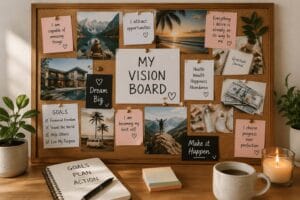
Why Vision Boards Work
Your brain constantly filters millions of pieces of information every day.
It simply has to.
When you repeatedly focus on a specific goal, your brain begins noticing opportunities that were always there but previously escaped your attention. Psychologists call this selective attention.
Imagine buying a red car.
Suddenly you notice red cars everywhere.
The same principle applies to your dreams.
Whether it’s owning your dream home, travelling the world, attracting financial abundance, improving your health, or finding your ideal relationship, keeping those goals visible trains your mind to recognise opportunities that support them.
Visualization also creates emotional engagement.
And emotions drive action.
Start With Crystal-Clear Goals
One of the biggest mistakes people make is creating a board full of random luxury cars, tropical beaches, and mansions without asking themselves a simple question.
“Do I genuinely want this?”
Instead, divide your life into meaningful areas.
For example:
- Health and fitness
- Relationships
- Career or business
- Financial freedom
- Personal growth
- Travel
- Spiritual wellbeing
- Family
- Lifestyle
Choose just one or two meaningful goals for each category.
Specific beats vague every time.
Instead of “be rich,” write:
“Earn an extra $5,000 each month through my online business.”
Instead of “lose weight,” write:
“Feel energetic and comfortably fit into size 12 jeans by December.”
Specific goals create stronger mental images.
Choose Images That Create Emotion
This step matters more than people realise.
Don’t choose pictures because they’re expensive or impressive.
Choose images that make you feel something.
When you look at your board, you should experience excitement, gratitude, peace, confidence, or determination.
If an image leaves you emotionally flat, replace it.
The best vision boards are emotional, not decorative.
Add Powerful Affirmations
Pictures grab your attention.
Words shape your beliefs.
Include short statements written as though they’re already happening.
Examples include:
- I attract amazing opportunities.
- Every day I become healthier.
- Money flows easily through multiple income streams.
- I confidently achieve my goals.
- My business grows every month.
- I deserve success.
Keep them believable enough that your subconscious doesn’t immediately reject them.
Include Your “Why”
Many vision boards focus entirely on outcomes.
Few focus on purpose.
Ask yourself:
Why do I want financial freedom?
Why do I want better health?
Why do I want my dream business?
Perhaps you want more time with family.
Maybe you want to travel.
Maybe you simply want peace of mind.
Write your reason directly onto your board.
Purpose creates persistence.
Don’t Overcrowd Your Board
Less is often better.
If your vision board contains hundreds of images competing for attention, your brain struggles to know what matters most.
Leave some space.
Highlight your biggest goals.
Your eyes should naturally land on your highest priorities within seconds.
Clarity beats clutter.
Make It Personal
Forget trying to impress anyone.
Your vision board is private motivation.
Include photos of yourself.
Add family pictures.
Use screenshots of your savings goals.
Include your own handwriting.
Write future dates.
Add inspirational quotes that genuinely resonate with you.
The more personal it feels, the stronger your connection becomes.
Create a Daily Visualization Habit
Here’s where many people stop.
They make the board.
Hang it up.
Wait.
Nothing changes.
Instead, spend just five minutes every morning looking at your board.
Close your eyes.
Imagine yourself already living those experiences.
Picture yourself opening the front door of your new home.
Feel the steering wheel of your new car.
Hear clients congratulating you.
Imagine checking your growing bank balance.
Your subconscious responds more strongly to vivid experiences than vague wishes.
Consistency matters far more than marathon visualization sessions.
Pair Every Goal With Action
This is what separates dreamers from achievers.
Every picture should have an action connected to it.
Dream home?
Research suburbs every weekend.
Business growth?
Publish one article every week.
Financial freedom?
Invest a percentage of every pay cheque.
Health goals?
Walk 30 minutes each day.
A vision board isn’t replacing action.
It’s directing it.
Think of your board as a roadmap rather than a magic wand.
Keep Updating It
Your dreams evolve.
Your board should too.
Every few months ask yourself:
Is this still my goal?
Have I achieved something?
Can I raise the standard?
Remove completed goals and celebrate them.
Replace them with new ambitions.
Your board should always reflect the person you’re becoming.
Digital or Physical?
Both work.
A physical board has the advantage of being impossible to ignore.
It’s there every day.
A digital version works well if you’re constantly on your phone or laptop.
Many successful people use both.
Create a large wall board at home and set sections of it as your phone wallpaper or computer background.
The more often you see your goals, the more familiar they become.
Common Vision Board Mistakes
Many vision boards fail because people unknowingly sabotage themselves.
Avoid these common traps:
- Filling the board with things other people value.
- Looking at it once a month.
- Setting unrealistic goals without smaller milestones.
- Never taking action.
- Forgetting to celebrate progress.
- Treating it as decoration instead of a daily tool.
Your board should inspire movement.
Not simply admiration.
A Simple Vision Board Formula
If you’re wondering how to create a vision board that actually works, keep this simple formula in mind:
Clear Goals + Emotional Images + Positive Affirmations + Daily Visualization + Consistent Action = Results
Every part supports the next.
Remove one piece, and the process becomes much weaker.
Make Your Future Feel Real Today
The most effective vision boards don’t predict the future.
They influence it.
Every glance reminds you of where you’re heading. Every visualization strengthens belief. Every action moves you one step closer to your goals.
Will every picture appear exactly as you imagined?
Probably not.
Life has its own surprises.
But you’ll often find yourself achieving things that once seemed impossible simply because your attention stayed fixed on them long enough to notice opportunities, make better decisions, and keep moving when others gave up.
So don’t wait for January.
Don’t wait for Monday.
Start today.
Gather meaningful images, write goals that genuinely excite you, and place your finished board somewhere you’ll see it every single day.
Because once you truly understand how to create a vision board that actually works, you’re no longer just imagining a better future.
You’re building it—one intentional decision at a time.