Unblocking Your Chakras for Better Visualization:
Clear the Inner Path to Your Vision
Have you ever tried to visualize the life you want, only to find that your mind keeps wandering?
You picture the goal for a few seconds. Then doubt appears.
Can I really do this? What if it doesn’t happen? Am I wasting my time?
Suddenly, your beautiful mental image has disappeared.
This is where unblocking your chakras for better visualization can become a useful personal practice.
Within traditional chakra systems, chakras are described as energy centres associated with different physical, emotional and psychological themes. From a scientific perspective, chakras aren’t established anatomical structures, so they should not be treated as medical facts. However, using chakra-focused meditation as a framework for attention, emotional awareness and relaxation can provide a meaningful structure for visualization practice.
And that distinction matters.
You don’t have to choose between spirituality and psychology.
You can use the symbolic language of chakras while also understanding what may be happening inside your brain when you visualize.
The goal isn’t simply to “think positive.”
The goal is to become more focused, emotionally connected and capable of turning an imagined outcome into purposeful real-world behaviour.
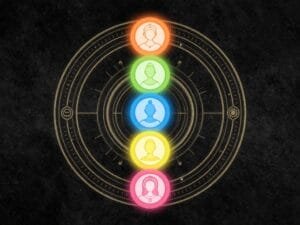
Why Unblocking Your Chakras for Better Visualization Can Help
Visualization sounds simple.
Close your eyes. Imagine something. Repeat.
But effective visualization requires more than producing a picture in your mind.
You need attention.
You need emotional engagement.
You need enough relaxation to allow your imagination to work without constantly being interrupted by fear and self-criticism.
This is where chakra-based visualization can provide a useful ritual.
Instead of randomly attempting to imagine your desired future, you work systematically through different areas of attention.
For example:
- Root chakra practices can represent safety and stability.
- Sacral chakra practices can represent creativity and emotional flow.
- Solar plexus practices can represent confidence and personal agency.
- Heart chakra practices can represent connection and emotional meaning.
- Throat chakra practices can represent communication and self-expression.
- Third-eye practices can represent imagination and inner imagery.
- Crown chakra practices can represent meaning, perspective and a sense of connection.
Whether you view these as energetic centres or symbolic psychological categories is ultimately personal.
The practical benefit is that they give your mind a sequence to follow.
The Brain Behind Visualization
There’s an important scientific reason visualization can feel surprisingly real.
Your brain doesn’t always treat imagination as completely separate from perception and action.
When you vividly imagine performing an activity, some of the brain networks involved in actually performing or perceiving that activity can become active.
This is one reason athletes, musicians and performers sometimes use mental rehearsal.
Imagine yourself walking onto a stage.
You hear the audience.
You feel your feet touching the floor.
You see the lights.
You hear your own voice.
The experience isn’t identical to actually standing on that stage, but your brain is still processing a detailed internal simulation.
This is where visualization becomes more powerful than passive daydreaming.
Visualization and the Reticular Activating System
You’ll often hear manifestation discussions mention the reticular activating system, or RAS.
The RAS is a collection of brainstem networks involved in regulating arousal and helping determine what sensory information receives attention.
It isn’t a magical manifestation mechanism.
You don’t simply imagine a red car and cause one to appear in your driveway.
However, your goals and expectations can influence what you notice.
Think about buying a particular model of car.
Before you become interested in it, you may barely notice that vehicle on the road.
Once you’re considering purchasing one, suddenly you see them everywhere.
The cars didn’t suddenly multiply.
Your attention changed.
Visualization can work similarly.
When you repeatedly define what matters to you, your brain becomes more prepared to notice information, opportunities and cues related to that objective.
That’s one practical reason visualization can support goal achievement.
How Fear Blocks Your Visualization
One of the biggest obstacles isn’t a lack of imagination.
It’s fear.
Perhaps you want financial freedom but feel uncomfortable imagining yourself wealthy.
Maybe you want a loving relationship but immediately think, That could never happen to me.
Perhaps you’re building a business but your mental movie ends with failure.
These reactions aren’t evidence that you’re incapable of manifesting something.
They’re signs that your nervous system may associate the desired outcome with uncertainty, risk or unfamiliarity.
This is why forcing yourself to repeat positive statements can sometimes feel ridiculous.
If your internal belief is:
“I’m going to become incredibly successful.”
while another part of you responds:
“No, you’re not.”
you have an internal conflict.
A better approach is gradual conditioning.
Start with an outcome that feels possible.
Then make the image increasingly detailed.
Instead of demanding that you believe everything immediately, allow your brain to become familiar with the possibility.
Unblocking Your Chakras for Better Visualization: Start at the Root
Before attempting an elaborate visualization, establish a sense of physical safety and stability.
Sit comfortably.
Place both feet on the floor.
Take several slow breaths.
Notice the chair supporting your body.
Feel your feet.
Listen to the sounds around you.
This is your grounding stage.
In chakra traditions, this corresponds with the root chakra.
Symbolically, you’re telling yourself:
“I am here. I am safe enough to imagine something new.”
This can be particularly useful if your mind races whenever you try to meditate.
Don’t fight the thoughts.
Notice them.
Return to your breathing.
Then continue.
Move Through the Chakras With Intention
Once you’ve grounded yourself, gradually move your attention upward.
Sacral Chakra: Bring Creativity Into Your Visualization
The sacral chakra is traditionally associated with creativity, pleasure and emotional flow.
Instead of merely asking, “What do I want?”, ask:
“What would I love to experience?”
This changes the exercise.
Perhaps you imagine travelling somewhere you’ve always wanted to visit.
Don’t simply see the destination.
Hear the sounds.
Feel the warmth of the air.
Notice the colours.
Imagine the taste of the food.
Allow yourself to experience curiosity and enjoyment.
Your visualization becomes an internal sensory movie rather than a static photograph.
Solar Plexus: Add Confidence and Agency
Now bring attention to the area around your upper abdomen.
Imagine yourself acting confidently.
Not arrogantly.
Not perfectly.
Confidently.
See yourself making the phone call.
Sending the proposal.
Walking into the meeting.
Starting the project.
Feel the sensation of taking responsibility for your choices.
This is important because visualization should not only show you the destination.
It should show you yourself taking action.
Heart Chakra: Add Emotional Meaning
A goal without emotional meaning can become an empty mental picture.
Ask yourself:
“Why does this matter to me?”
Maybe your vision represents freedom.
Maybe it means more time with your family.
Maybe it means creating something you’re proud of.
Maybe it represents independence.
Allow that feeling into your visualization.
Don’t manufacture emotion.
Simply notice whatever genuine feeling appears.
Throat Chakra: Hear Yourself Express the Vision
The throat chakra is traditionally associated with communication and self-expression.
Use this stage to imagine yourself speaking differently.
What would you say if you genuinely believed you were capable?
Imagine having the conversation.
Hear your voice.
Perhaps you’re negotiating a deal.
Perhaps you’re telling someone about your new business.
Perhaps you’re calmly saying no to something that no longer serves you.
The auditory element adds another layer to your internal movie.
Third Eye: Make the Mental Movie Crystal Clear
The third-eye chakra is commonly associated with intuition, insight and inner vision.
This is where your visualization can become particularly vivid.
Close your eyes and construct one specific scene.
Don’t jump ten years into the future.
Choose a moment.
Perhaps you’ve achieved the goal.
Where are you?
What time of day is it?
What can you see?
What can you hear?
What are you wearing?
Who is nearby?
What expression is on your face?
What happens immediately before and after this moment?
The more coherent the scene becomes, the less it resembles vague wishful thinking.
Crown Chakra: Connect the Vision to Meaning
The crown chakra is traditionally associated with spirituality, consciousness and a broader sense of meaning.
You don’t need to interpret this literally.
Instead, use it as an opportunity to zoom out.
Ask:
“What kind of person am I becoming?”
This question can be more powerful than simply asking what you want to possess.
Maybe you want to become disciplined.
Creative.
Generous.
Brave.
Healthy.
Reliable.
Independent.
Your future isn’t just a collection of possessions.
It’s a pattern of behaviour.
A 5-Minute Chakra Visualization Ritual
Try this simple exercise today.
Step 1: Ground yourself
Sit comfortably.
Take five slow breaths.
Feel your feet against the floor.
Step 2: Choose one outcome
Don’t visualize your entire life.
Pick one meaningful goal.
Step 3: Build one scene
Imagine a moment when you’ve made meaningful progress toward that goal.
See it.
Hear it.
Feel it.
Step 4: Add emotionAsk:
“How would I feel if this were happening right now?”
Perhaps you feel relief.
Excitement.
Confidence.
Peace.
Let the feeling develop naturally.
Step 5: Imagine the action
Now rewind the mental movie.
What did you do to reach that moment?
See yourself taking the steps.
Step 6: Open your eyes
Take one physical action immediately.
Send the email.
Write the plan.
Make the call.
Research the opportunity.
Exercise.
Create the first draft.
Visualization ends where action begins.
Unblocking Your Chakras for Better Visualization When You Feel Doubt
You don’t need to eliminate doubt before you visualize.
That’s an unrealistic expectation.
Doubt is part of being human.
Instead, change your relationship with it.
When the thought appears:
“This won’t work.”
try:
“I’m noticing that I’m afraid this won’t work.”
That’s different.
You’re observing the thought rather than automatically accepting it as truth.
This technique resembles a broader psychological principle: thoughts can be treated as mental events rather than commands.
The same applies to overthinking.
You don’t need to solve your entire future during a ten-minute visualization session.
Your only job is to experience the scene.
Then return to the present.
Visualization Isn’t a Substitute for Action
This is where manifestation content sometimes goes wrong.
Visualizing a successful business doesn’t replace building one.
Imagining financial security doesn’t replace managing money.
Seeing yourself fit and energetic doesn’t replace exercise, sleep and sensible nutrition.
Visualization can help with motivation, attention and mental rehearsal.
But results still require behaviour.
Think of visualization as a rehearsal room.
You practice the internal experience.
Then you walk onto the real-world stage.
Turn Your Vision Into Micro-Actions
After every visualization session, ask:
“What is the smallest useful thing I can do today?”
Keep it small.
For example:
- Make one important phone call.
- Write 200 words.
- Spend 15 minutes learning a skill.
- Send one proposal.
- Research one opportunity.
- Organize your workspace.
- Create tomorrow’s priority list.
- Have one conversation you’ve been avoiding.
- Take one step toward your financial goal.
Small actions matter because they provide your brain with evidence.
You’re no longer merely imagining a different version of your life.
You’re behaving differently.
That feedback can strengthen your sense of capability.
The Real Power of Unblocking Your Chakras for Better Visualization
You don’t need to believe that chakras are scientifically proven energy centres to benefit from chakra-inspired visualization.
You can approach the practice as a symbolic framework for attention, emotion and self-reflection.
Ground yourself.
Open your creativity.
Build confidence.
Connect with your heart.
Express yourself.
Sharpen your inner imagery.
Connect your goal to something meaningful.
Then act.
The most useful visualization isn’t the one where everything magically appears.
It’s the one where you become clear enough to recognize your next move.
Unblocking your chakras for better visualization can therefore become less about forcing the universe to deliver something and more about creating a focused inner state that supports intentional behaviour.
Your imagination creates the rehearsal.
Your emotions give it meaning.
Your attention helps you notice possibilities.
Your actions bring the vision into the physical world.
Your Action Plan for Today
Before finishing, do this:
- Sit quietly for five minutes.
- Ground yourself with slow breathing.
- Choose one meaningful goal.
- Visualize one specific future scene.
- Add sight, sound and physical sensation.
- Notice the emotion connected with that scene.
- Imagine yourself taking the necessary actions.
- Write down one action you can take today.
- Complete that action before the day ends.
You don’t have to see the entire path.
You only need enough clarity to take the next step.
FAQ: Unblocking Your Chakras for Better Visualization
1. Does unblocking your chakras for better visualization really work?
Chakras aren’t scientifically established physical energy centres. However, chakra-based meditation can provide a structured way to focus attention, explore emotions and create a calming visualization routine. Visualization itself is also used in areas such as sports and performance training as a form of mental rehearsal.
2. Which chakra should I focus on for better visualization?
The third-eye chakra is traditionally associated with inner vision and intuition, making it a natural focus for visualization. However, working through the chakras from grounding and emotional awareness toward imagination can create a more complete practice.
3. How often should I practice unblocking your chakras for better visualization?
Consistency matters more than duration. Try five to ten minutes once a day, preferably at a time when you won’t be interrupted. Keep the visualization specific and finish each session by taking one practical action connected to your goal.